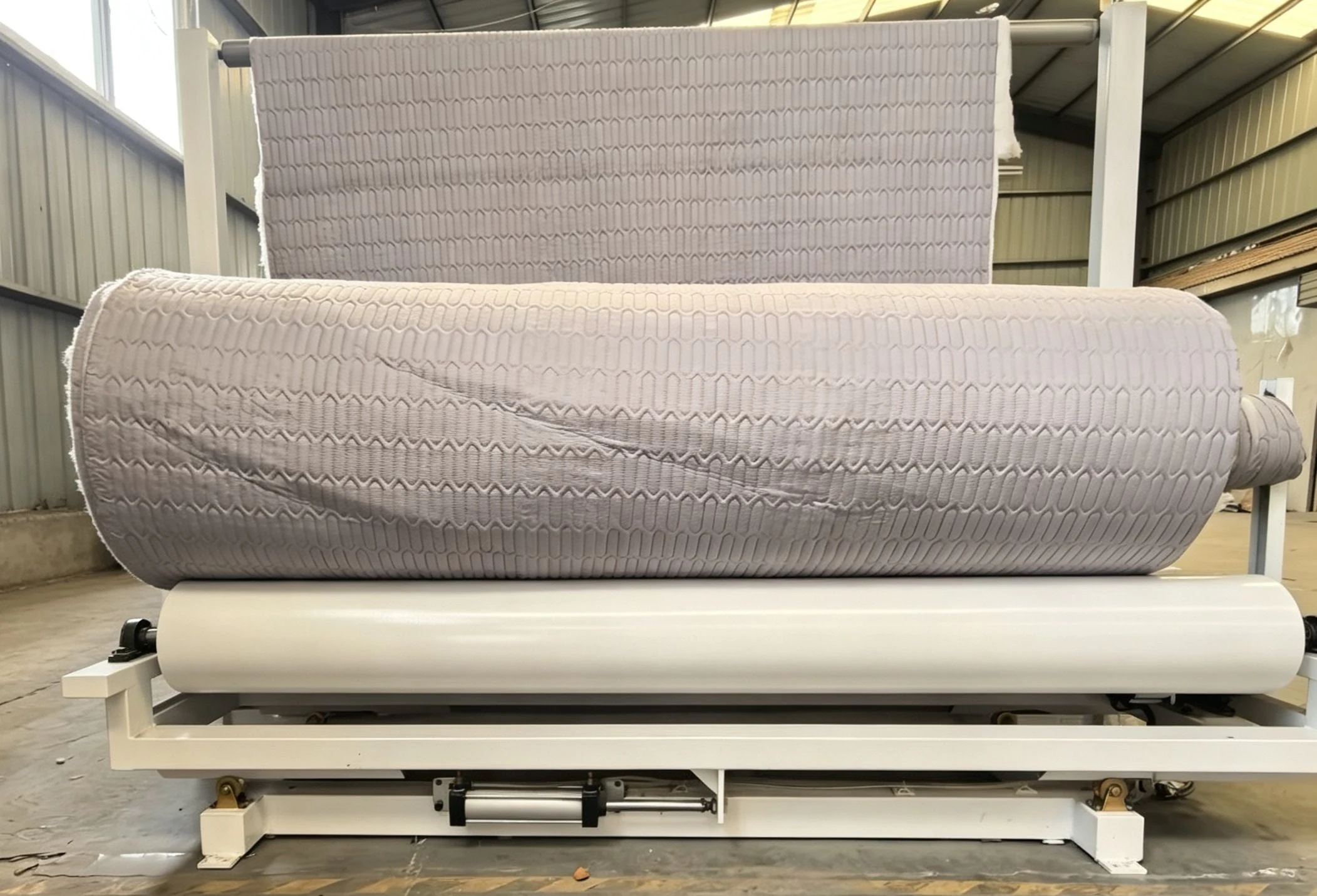
Aligned from the start
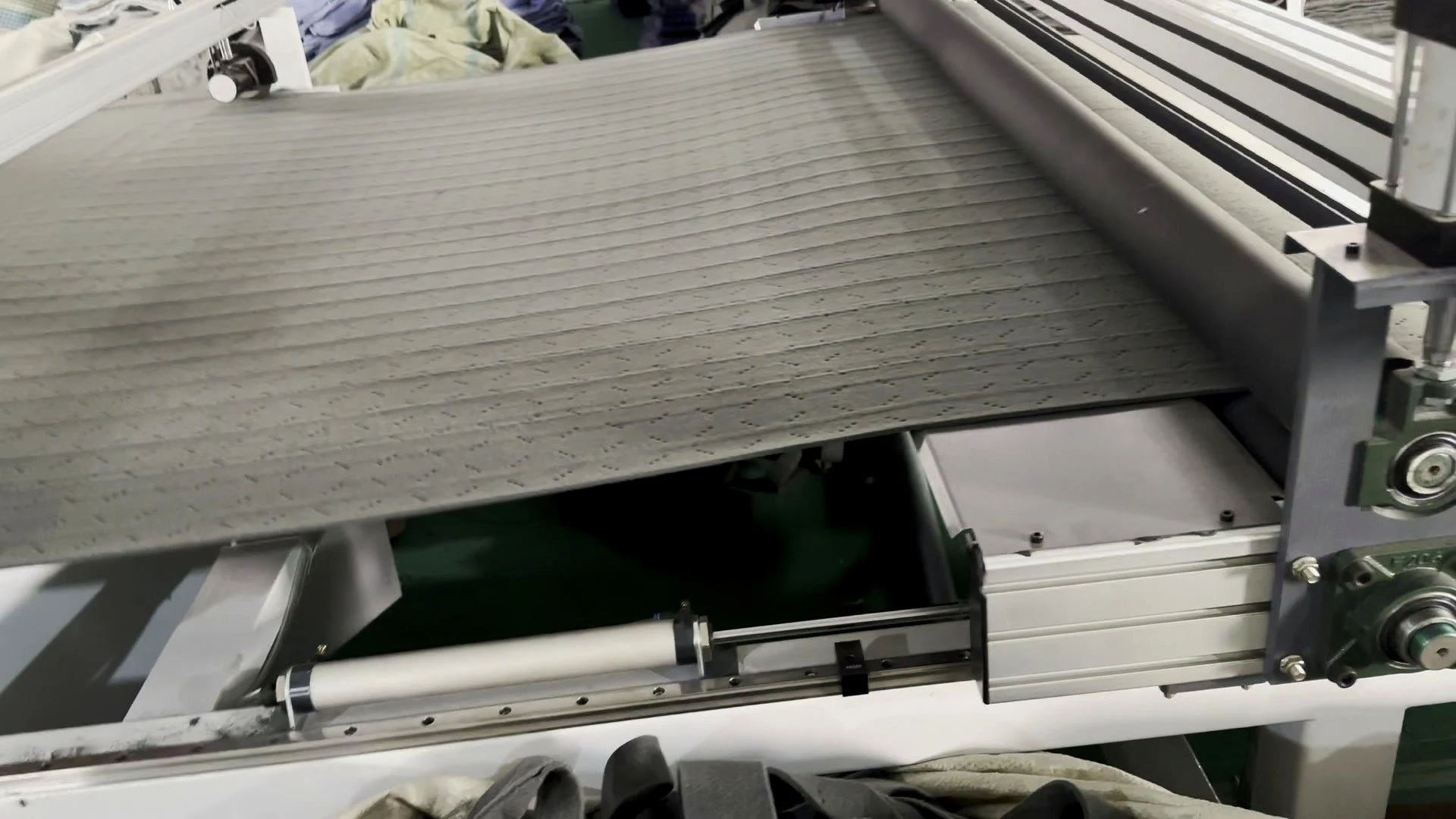
Two included feeders supply upper and lower fabric layers. Infrared sensing corrects drift while dual shafts manage tension.

HT SERIES / ELECTRIC BLANKET AUTOMATION
One configured production line carries fabric from active feeding through wire placement, punching, lamination and finished-piece cutting.
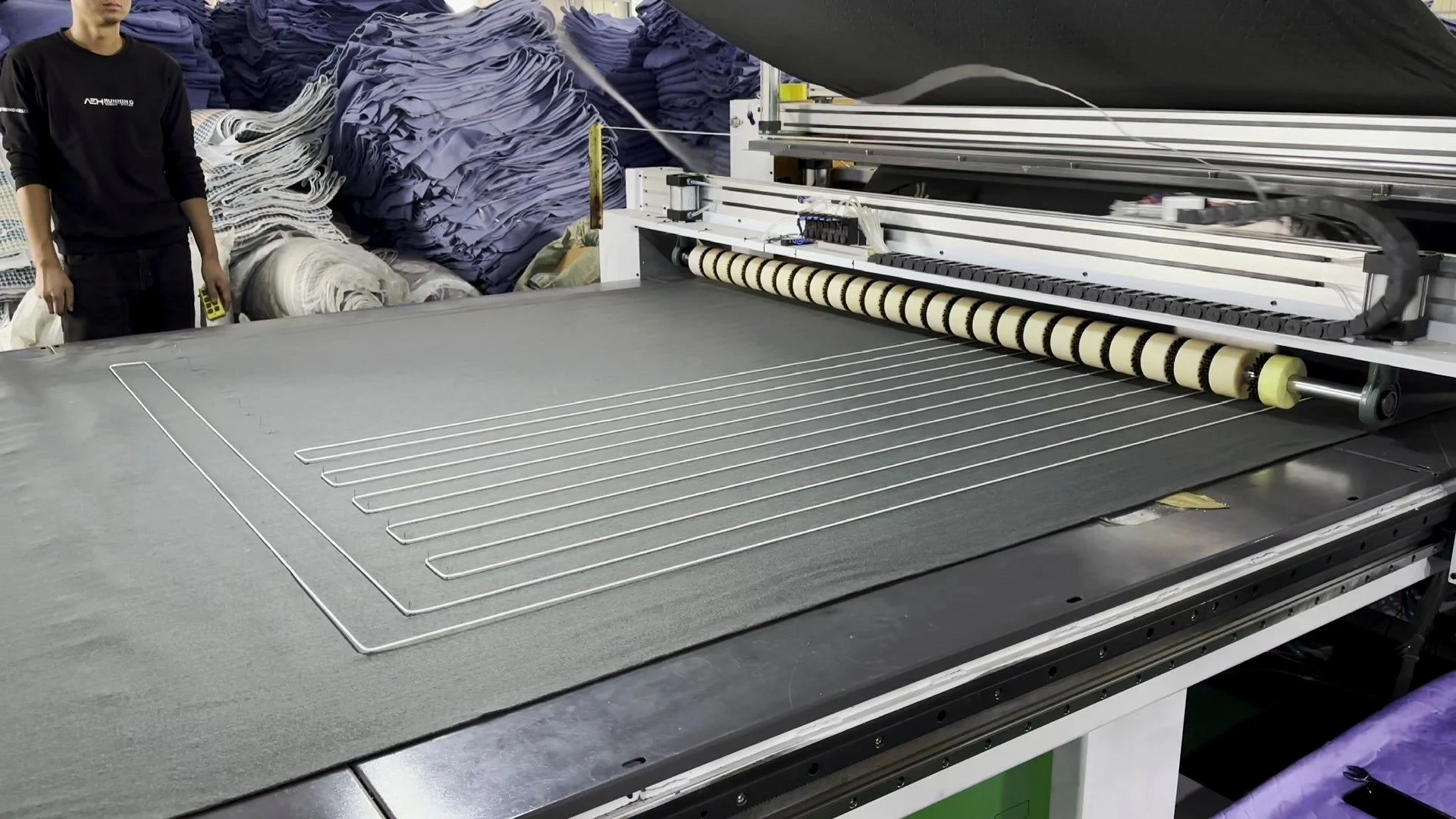
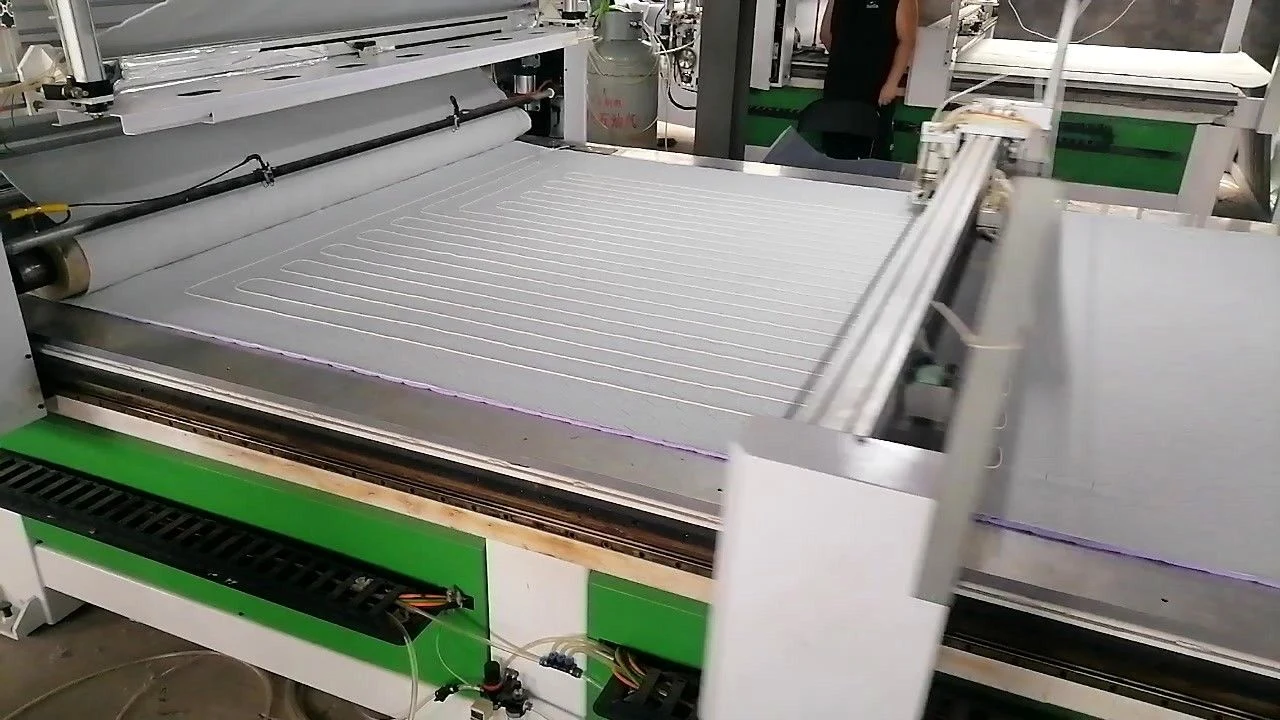
Programmed placement carries each blanket through a repeatable pattern.
Blue Lion catalog photograph · automatic heating-wire placementTHE LINE
The HT Series replaces hand-guided wire laying with a programmed, connected workflow. Heating-wire length, spacing and terminal positions are set to the product. Infrared fabric alignment, automated hooking, flame lamination and cutting carry the piece through the line.
Blue Lion builds the working width and layout around your own blanket. Four size recipes can be switched from the touchscreen in the standard configuration; additional sizes can be quoted separately.
FIVE STAGES · ONE LINE
Two included feeders supply upper and lower fabric layers. Infrared sensing corrects drift while dual shafts manage tension.
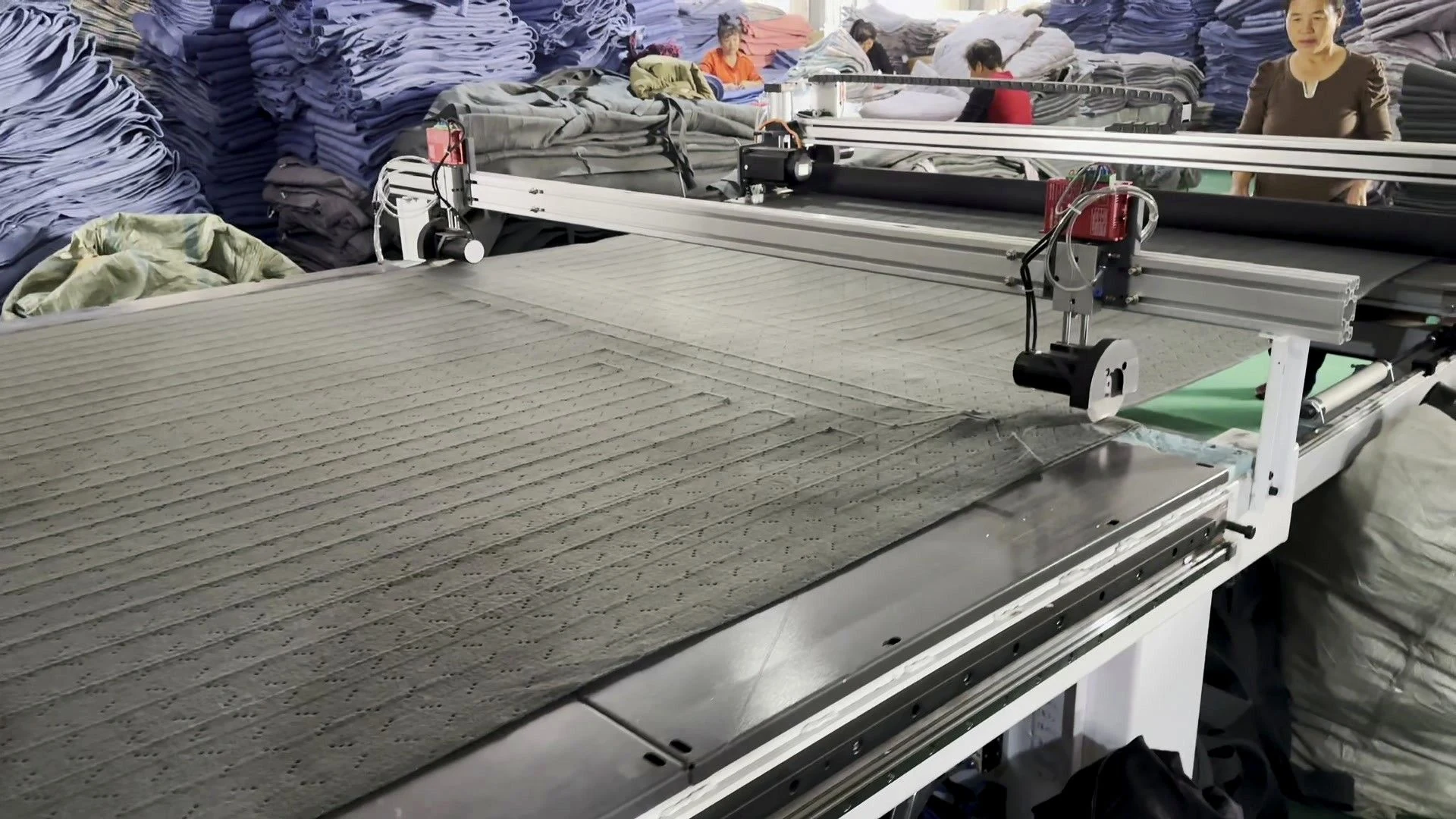
The machine lays heating wire to the configured length, spacing and position without manual routing.
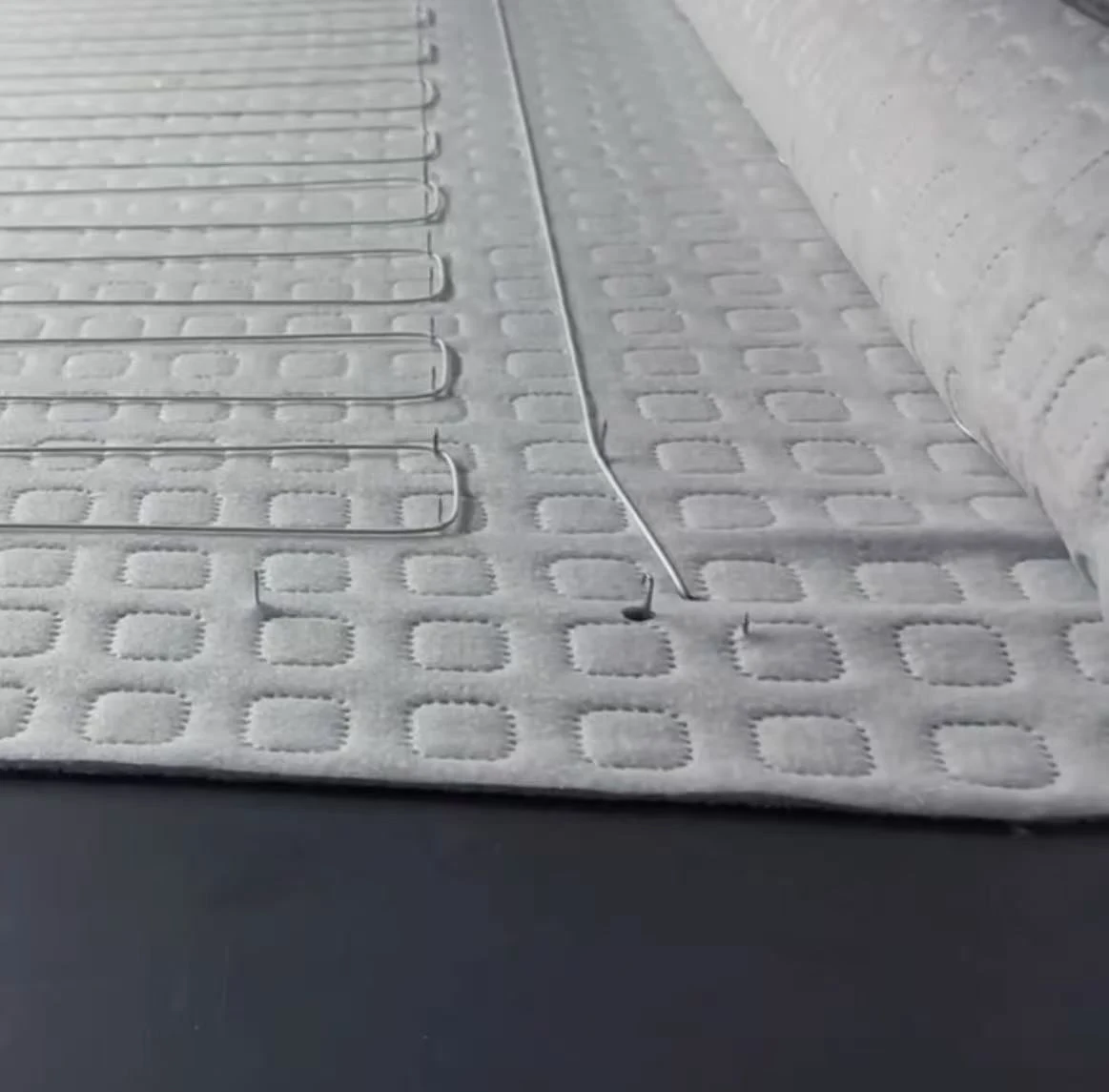
Wire-end reserve, punching and hooking follow the stored recipe for consistent downstream assembly.
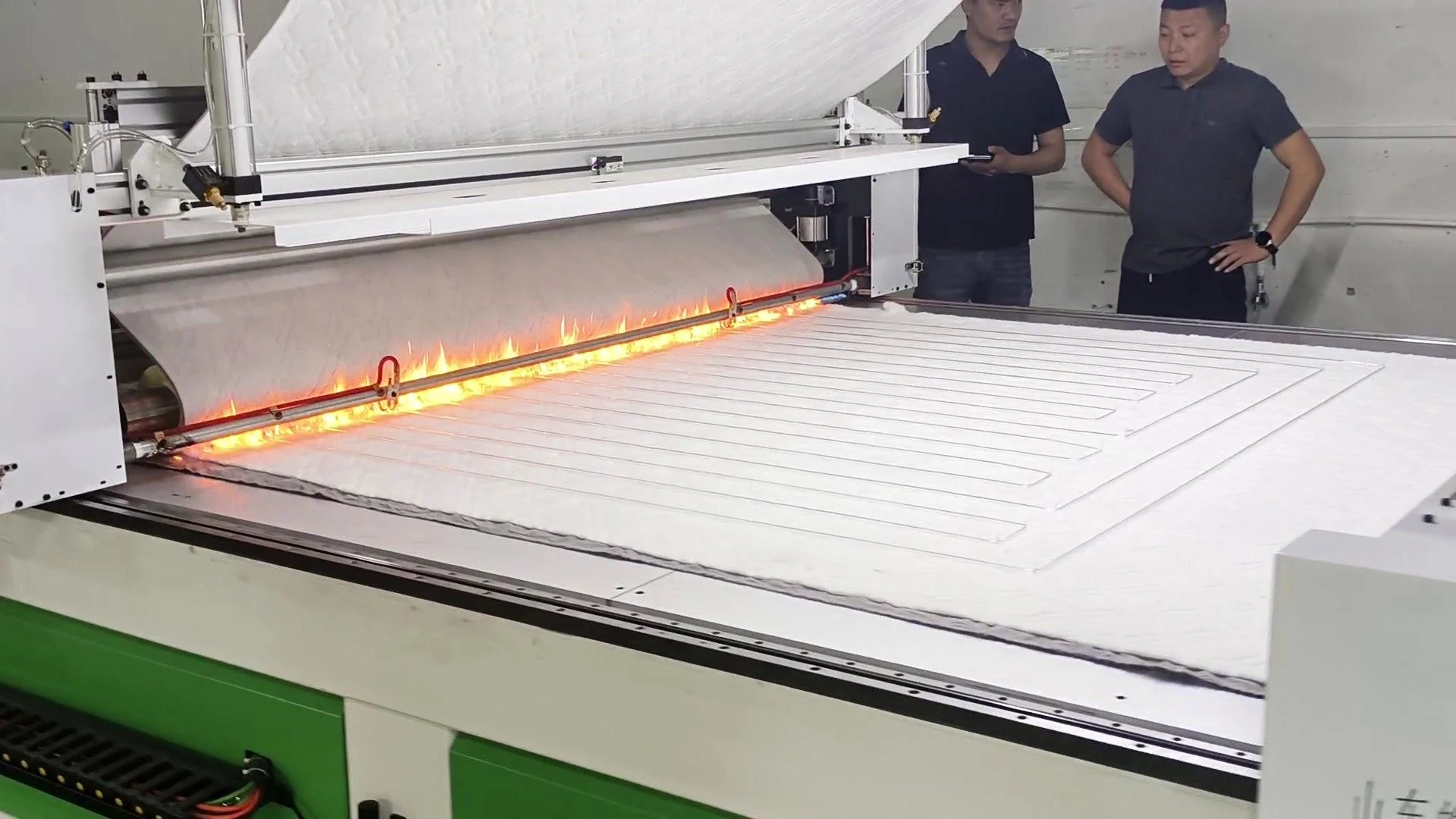
Flame bonding joins the layers in the line without spray adhesive. Propane and a controlled gas system are required.
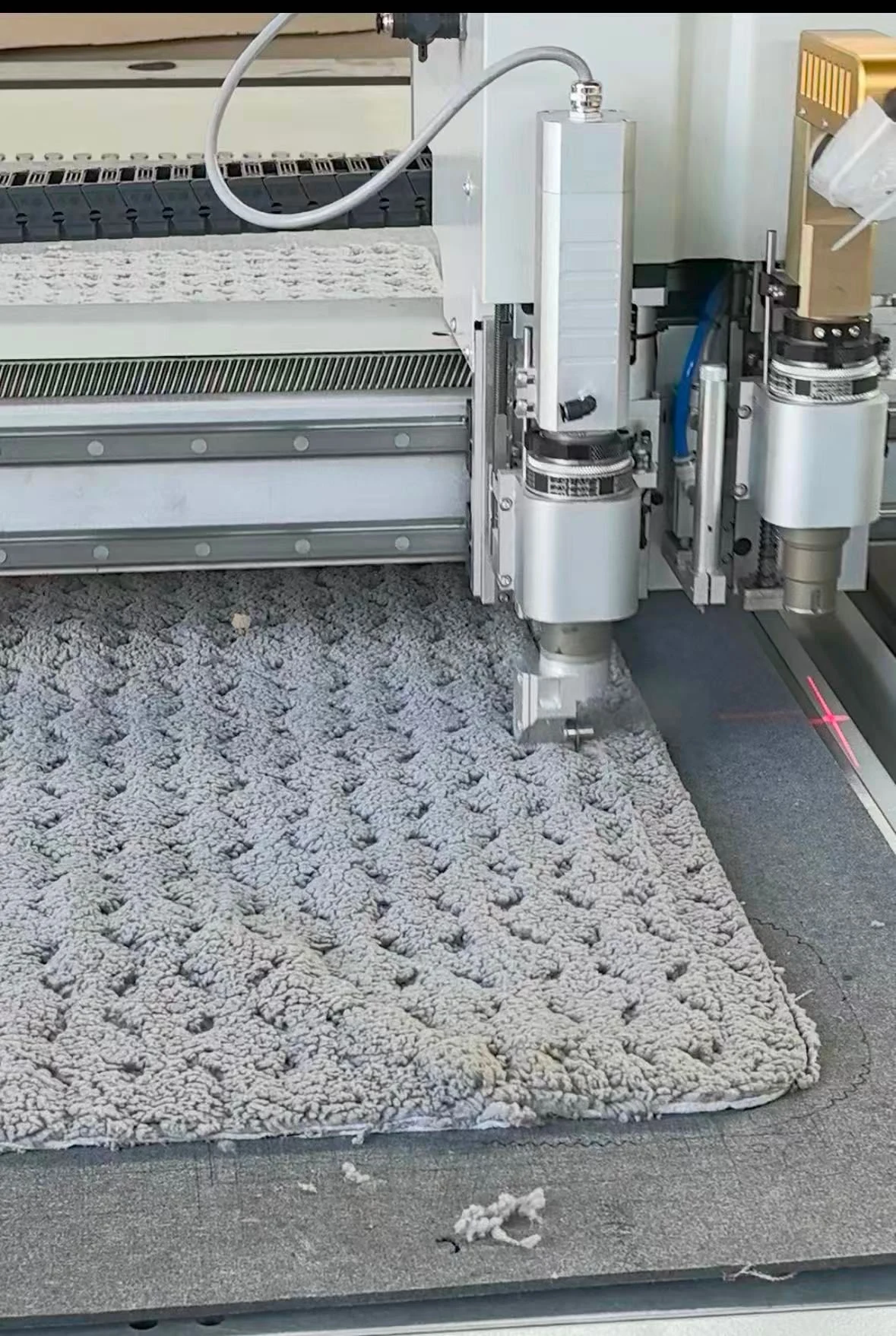
Standard cuts square corners; Pro adds oscillating-knife cutting with an adjustable corner radius.
CHOOSE THE FINISH
The automatic production stages are shared. Pro adds only the rounded-corner cutting process.
| Capability | Standard | Pro |
|---|---|---|
| Square-corner cutting | Included | Included |
| Rounded corners with adjustable radius | — | Integrated oscillating-knife station |
| Automatic punching, hooking and flame lamination | Included | Included |
| Wireless remote and four size presets | Included | Included |
| Footprint (L × W × H) | 6.5 × 2.9 × 2.0 m | 11.5 × 2.9 × 2.0 m |
The final configuration, footprint and price are confirmed by quotation.
THE REAL EQUIPMENT
HT SERIES
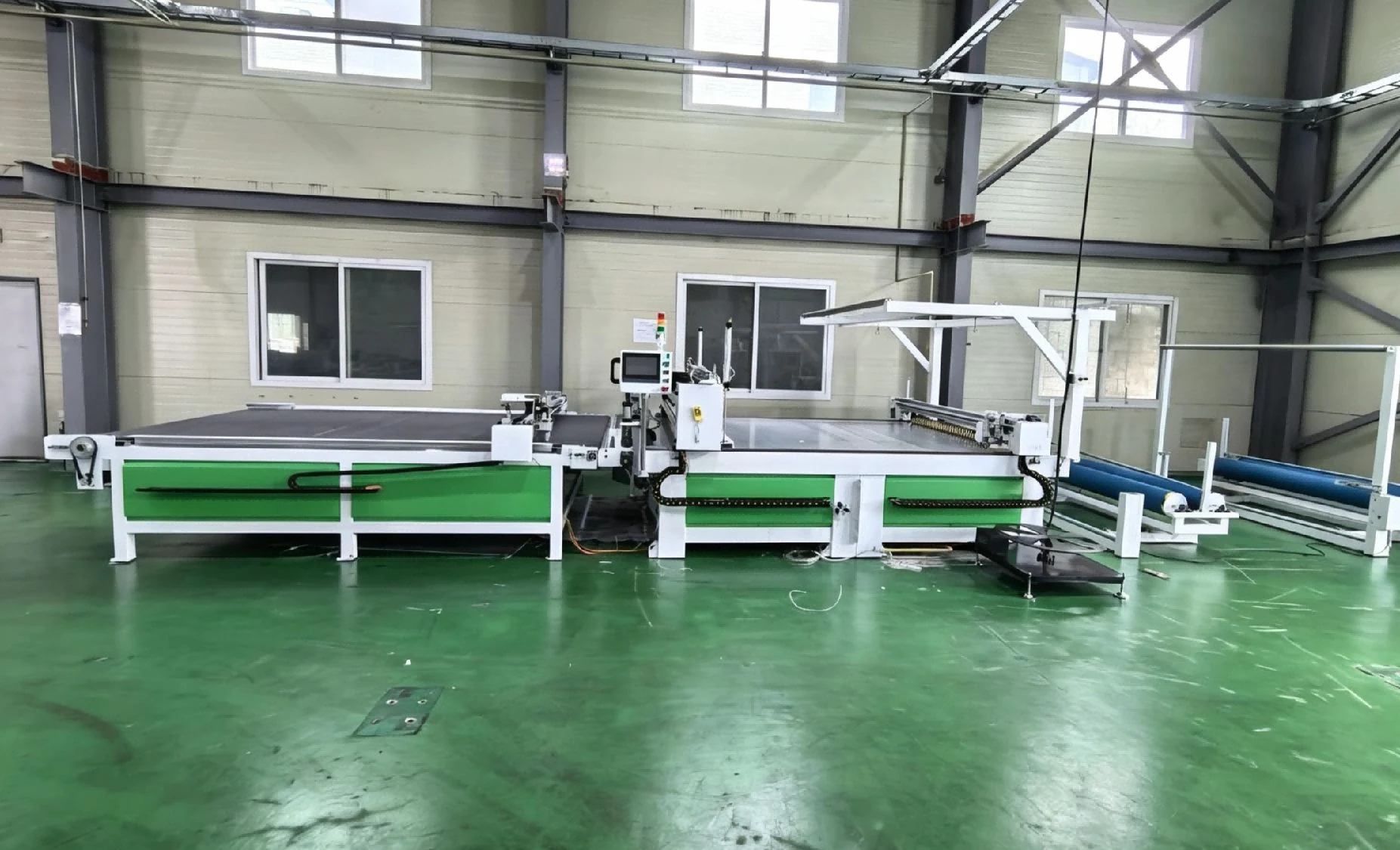
| Model | HT Series; working width configured to the customer’s product |
|---|---|
| Typical product sizes | 1.1 × 2.0 m, 1.5 × 2.0 m, 0.9 × 1.8 m, 1.3 × 1.8 m and 1.8 × 2.0 m; other sizes by agreement |
| Cycle time | Approximately 55–60 seconds per 1.8 × 2.0 m blanket; as little as 50 seconds for a configured format, subject to sample validation |
| Electrical supply | 220 V; 4.5 kW rated, approximately 4.5 kWh over one hour at rated draw. Local voltage can be configured with a transformer. |
| Compressed air | At least 0.5 MPa; external supply required |
| Lamination gas | Propane recommended; external supply required |
| Footprint · Standard | 6.5 × 2.9 × 2.0 m (L × W × H) |
| Footprint · Pro | 11.5 × 2.9 × 2.0 m (L × W × H) |
| Preset sizes | Four product sizes with touchscreen switching in a standard configuration; additional presets optional |
| Operator interface | Touchscreen, physical controls and wireless remote; Chinese, Korean, English and Japanese interfaces listed |
| Typical applications | Electric blankets, water-heated mats and construction blankets; other designs require configuration review |
Catalog specifications are indicative. Product dimensions, power supply and equipment layout follow the actual ordered configuration; utilities and production conditions affect measured output.
SAFETY & ENERGY
The 4.5 kW rating helps plan the electrical load. The machine also needs compressed air and gas, which are separate from the electrical figure.
The flame lamination station is described in the catalog with instant gas cut-off, zoned shut-off, automatic flame-out on equipment fault and audible and visual alarms. Site installation, gas handling and operator training remain part of commissioning.
Explore the safety design ↗BUILT TO ORDER
We review size, heating-wire length and spacing, product power, fabric, target throughput and finish. Options include more stored sizes and a dual-head wiring design for capacity-focused projects. Water-heated mats require separate engineering for tubing and pump systems.
The right way to lock a specification is a sample run using your materials and an agreed acceptance plan.
Review the available test data ↗YOUR NEXT PRODUCTION LINE
Share your format, fabric, heat layout, destination voltage and production target to begin the configuration discussion.
Prepare a project brief